
🔥 Wildfire Prevention Starts at Your Roof: Why Clean Gutters Matter in Colorado

Colorado Wildfire Prevention and your Gutters
Wildfires in Colorado aren’t just a mountain issue anymore.
According to the Colorado State Forest Service, more than half of Coloradans live in areas at risk—what’s known as the wildland-urban interface, where homes meet natural vegetation. Wildfire prevention for home in Colorado starts with clean gutters and a clean roof.
And here’s the part most homeowners don’t realize:
👉 Homes don’t usually ignite from flames.
👉 They ignite from embers landing on or near the home.
That’s where your gutters come into play.
Colorado State Forest Service guidance on Gutter and Roof Cleaning
The Colorado State Forest Service defines the Home Ignition Zone as your home and the immediate area around it—and it’s the most critical area to maintain.
To reduce wildfire risk, their guidance is simple but powerful:
👉 Reduce anything that can burn on or near your home.
That includes something most people overlook…
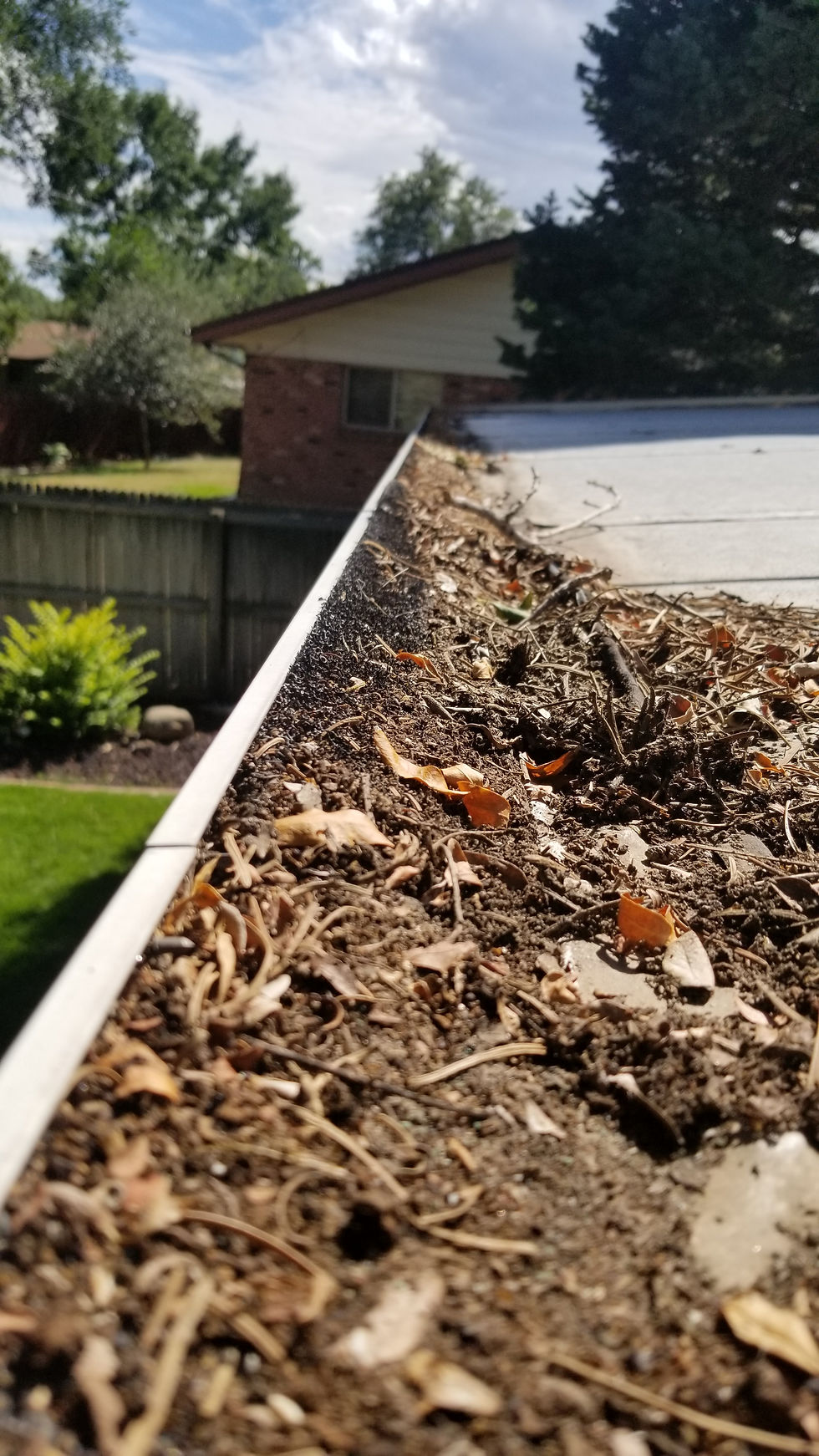
Full Colorado Gutters Can Become Fuel
One of the most direct recommendations from the Colorado State Forest Service is:
➡️ “Remove all leaves, needles and other debris from decks, roofs and gutters.”
Why?
Because when gutters fill with:
Pine needles
Leaves
Dry debris
They become fuel attached directly to your home.
And during a wildfire, embers can travel long distances and land right there—igniting that debris and spreading fire to:
Fascia
Roof edges
Attic vents
This Isn’t Just Theory—It’s One of the Top Risks

Wildfire experts consistently emphasize:
Embers can travel over a mile ahead of a fire
Homes often ignite from small combustible materials near the structure, not direct flames
That’s exactly why gutter debris is such a concern.
It’s dry, elevated, and directly connected to your home.
Gutters are designed to move water safely away from your home—but when they fill with dry debris like pine needles, leaves, and dirt, they can become a serious wildfire hazard. This debris sits right along the roofline, creating a dry, elevated fuel source that’s directly attached to your home.
During a wildfire, wind-blown embers can travel long distances and land on roofs and in gutters. When those embers land in dry, compacted debris, they can ignite quickly and begin spreading fire to surrounding materials like fascia, roof decking, and attic spaces—often before homeowners even realize there’s a problem.
Because gutters run along the edge of the roof and connect multiple parts of the home, they can act as a pathway for fire to spread. What starts as a small ignition point in a clogged gutter can quickly become a much larger threat, especially in Colorado’s dry and windy conditions.
Why Pine Needles Make It Worse in Colorado

If you live anywhere in the Denver metro—Aurora, Parker, Castle Rock—you’ve seen how quickly pine needles build up.
And they’re especially dangerous because they:
Dry out extremely fast
Pack tightly into gutters
Ignite easily
Can smolder before you even notice
The Colorado State Forest Service specifically calls out pine needles and leaves near the home as materials that should be removed regularly to reduce ignition risk.
Gutter Guards Help—But They’re Not Fireproof
We like to be very upfront about this:
Gutter guards are helpful—but they are not a wildfire solution.
Fine debris can still collect
Pine needles can sit on top
Maintenance is still required
Even with guards, the recommendation is still:
👉 Inspect and maintain regularly
Simple Steps to Reduce Your Risk
Based on guidance from the Colorado State Forest Service, here are the most important actions:
✔ Keep gutters and roofs clear
Regularly remove leaves, needles, and debris
✔ Clean within 0–5 feet of your home
This is the highest-risk zone for ignition
✔ Remove debris from decks and porches
Embers often land in these areas
✔ Trim branches near your roof
Reduce places for embers to collect
✔ Maintain defensible space
Create separation between your home and anything that can burn
Why This Matters More Right Now
With Colorado’s ongoing drought and dry conditions, wildfire risk isn’t seasonal anymore—it’s year-round.
The Colorado State Forest Service even notes that wildfire preparedness is no longer optional—it’s something homeowners need to maintain continuously.
Protecting Your Home Starts with the Basics
At Hometown Gutter, we’ve been working on Colorado homes since 2005, and we see this every day:
Homes that look fine from the ground—but have packed, dry debris sitting in the gutters and roof valleys.
That’s why we focus on:
Thorough gutter cleaning
Roof debris removal
Honest inspections with no pressure
Because sometimes the smallest maintenance items make the biggest difference.
Get a Free, No-Pressure Inspection
If you’re not sure what’s sitting in your gutters right now:
📞 Call or text: (720) 440-RAIN📍 Serving Aurora, Denver, and surrounding areas
We’re happy to take a look and give you clear, honest recommendations—no pressure, ever.
FAQ: Wildfire Risk & Gutters
Do gutters really affect wildfire risk?
Yes. Dry debris in gutters is a known ignition point for embers.
How often should gutters be cleaned in Colorado?
At least 1–2 times per year, more if you have pine trees nearby.
Are gutter guards enough protection?
No. They help, but still require maintenance and inspection.
Is roof debris just as dangerous?
Yes—embers often land on roofs first, making debris there a major risk.


Spot-on breakdown regarding how wind-blown embers and dry organic debris trapped along rooflines create significant ignition risks! Accumulated pine needles, dead leaves, and moss in roof valleys not only pose a fire hazard in dry climates but also trap moisture and cause premature shingle decay in humid regions. For homeowners looking to protect their home's exterior, partnering with local experts for roof cleaning Burlington KY guarantees that low-pressure soft wash techniques safely remove dry buildup, algae, and moss without damaging shingles.